


More and more Canadian dry cleaners are adding professional wet cleaning to their plants. But is it a replacement for solvent cleaning, or a complement? This guide compares wet cleaning vs dry cleaning so you can decide what fits your business and your customers.
What is professional wet cleaning?
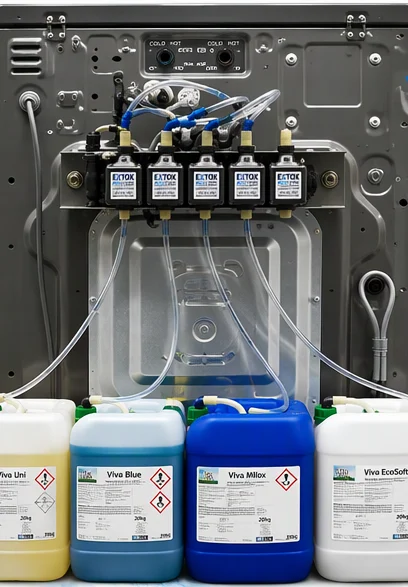 Professional wet cleaning is not home laundry. It uses water together with computer-controlled washers that tightly manage mechanical action, temperature and water levels, specially formulated wet cleaning detergents and conditioners, controlled drying, and finishing equipment designed to restore shape and size.
With the right program, many garments labelled “dry clean only” can be wet cleaned safely.
What is dry cleaning?
Dry cleaning uses a solvent instead of water. Solvents such as PERC, hydrocarbon, GreenEarth and Sensene dissolve oils and greases without swelling fibres the way water can. Read our dry cleaning solvent comparison for the details of each option.
Wet cleaning vs dry cleaning: key differences
| Wet cleaning | Dry cleaning | |
|---|---|---|
| Cleaning medium | Water plus specialty detergents | Solvent (PERC, hydrocarbon, silicone, modified alcohol) |
| Best at removing | Water-soluble soils: sweat, sugars, salts, many food stains | Oils, greases and oily stains |
| Main risks | Shrinkage, dye bleeding and felting if the program is wrong | Damage to some trims and delicates with strong solvents |
| Finishing | Often needs tensioning or form finishing | Usually simpler pressing |
| Compliance | Lighter chemical rules; normal wastewater considerations | Depends on solvent; PERC has strict federal rules |
Advantages of wet cleaning
- No solvent purchase, storage or solvent waste disposal.
- Excellent results on water-soluble soils and odours.
- A strong “non-toxic” marketing message for many customers.
- Uses equipment that can also run your shirt and household laundry.
Advantages of dry cleaning
- Better removal of oily and greasy soils.
- Lower risk of shrinkage on sensitive fibres such as wool, silk and rayon.
- Faster, simpler finishing for many tailored garments.
Should you switch or combine?
For most plants the answer is not wet cleaning vs dry cleaning but both. Many cleaners keep one solvent machine for the garments that truly need it and move a large share of work to wet cleaning. This lowers solvent use and, for PERC users, reduces waste and compliance work under the federal PERC regulations.
Which garments suit wet cleaning?
In the wet cleaning vs dry cleaning decision, the garment mix matters most. Cotton, linen, polyester blends, many wools and most everyday office wear wet clean very well with the right program. Items heavily soiled with sweat, food and drink often come out cleaner and fresher than they would in solvent.
Be more careful with tailored jackets with complex interlinings, structured wool coats, acetate and rayon linings, leather trims and garments with unstable dyes. These are often still safer in solvent. A good rule is to test new garment types on a hidden area, and keep a short list of items that always go to the dry cleaning machine.
Costs to consider before you switch
- Equipment: a programmable washer, a dryer with moisture or residual-humidity control, and suitable finishing equipment.
- Chemistry: dedicated wet cleaning detergents, conditioners and sizing, ideally dosed automatically so every load gets the same amount.
- Training: your team needs time to learn the programs and the finishing techniques.
- Savings: less solvent to buy and store, and for PERC users less PERC waste disposal and paperwork.
Many plants find that the best answer to wet cleaning vs dry cleaning is to run both, sending each garment to the process that suits it best.
Getting started with wet cleaning
- Choose a laundry and wet cleaning machine with fully programmable controls.
- Use dedicated wet cleaning chemistry, and add automatic dosing with the AQUA CORE™ laundry dosing system for consistent results.
- Invest in suitable finishing equipment.
- Train your team and test programs on sample garments before going live.
Extox Industries can help you plan the right mix of wet cleaning and dry cleaning for your plant. Contact us or call 1-800-501-8601.